| 2025 A-WEB Media Capacity Development Program |
|---|
| Last updated 2025-12-01 |
|
2025 A-WEB Media Capacity Development Program
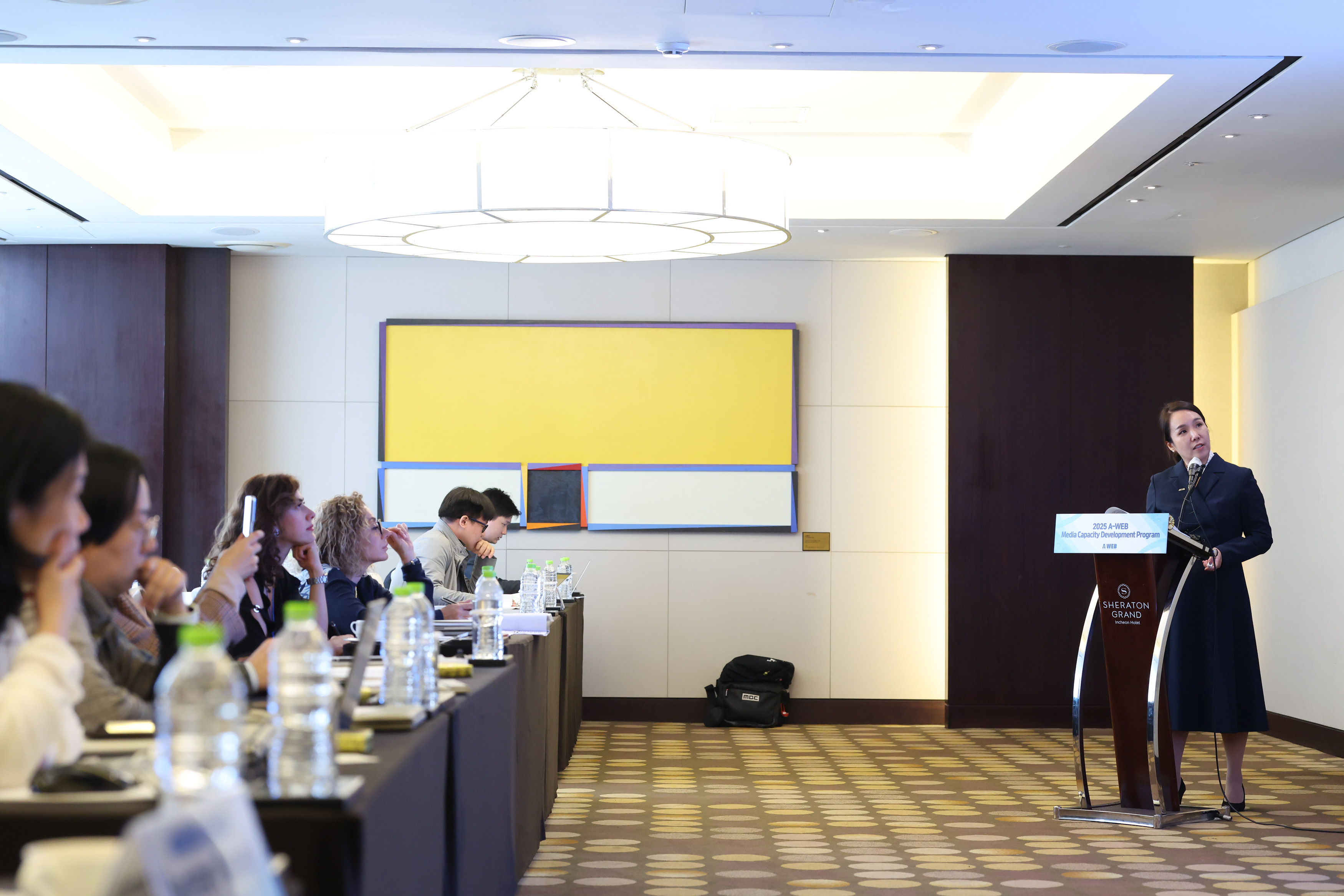
On the first day,
Ms. Taeryung Rita Lee, Director of the Capacity Development and Communications
Department at the A-WEB Secretariat, delivered a lecture on "Global
Challenges for EMBs: Countering Information Disorder through Behavioral
Strategies." She explained information disorder through Applied Behavior
Analysis (ABA), which examines behavior as influenced by Antecedents, Behavior,
and Consequences. According to this theory, EMBs should focus on reshaping
environments where disinformation thrives through prebunking and
identity-affirming messages, rather than relying solely on fact-checking. She also
shared Indonesia's 2024 case, including Anti-Hoax Prebunking Training for
novice voters and a Google-Jigsaw prebunking campaign with influencer Vincent
Rompies. Participants gained practical insights to help take action.
During the country
report session, delegations presented their election commissions' efforts in
combating disinformation, reflecting on their challenges and successes. The
following days included lectures on topics such as deepfakes, fake news
detection tools, and organizational responses to misinformation. Experts from South
Korea's National Election Commission (NEC) led discussions on media response
systems, the establishment of a Cyber Investigation Division, and methods to
identify fake news. Other topics included fair election coverage, political
advertising regulations, and the role of public opinion polls. Prof. Dong Hyun
Song emphasized effective crisis management, stressing preparation, prevention,
and resilience. These sessions provided valuable insights into managing
information integrity and ensuring fair elections.
To assess the
program's relevance, effectiveness, and clarity, as well as the lecturer’s
communication skills, the A-WEB Secretariat conducted surveys after each
session. Participants rated each aspect on a scale of 1 to 5, with 5 indicating
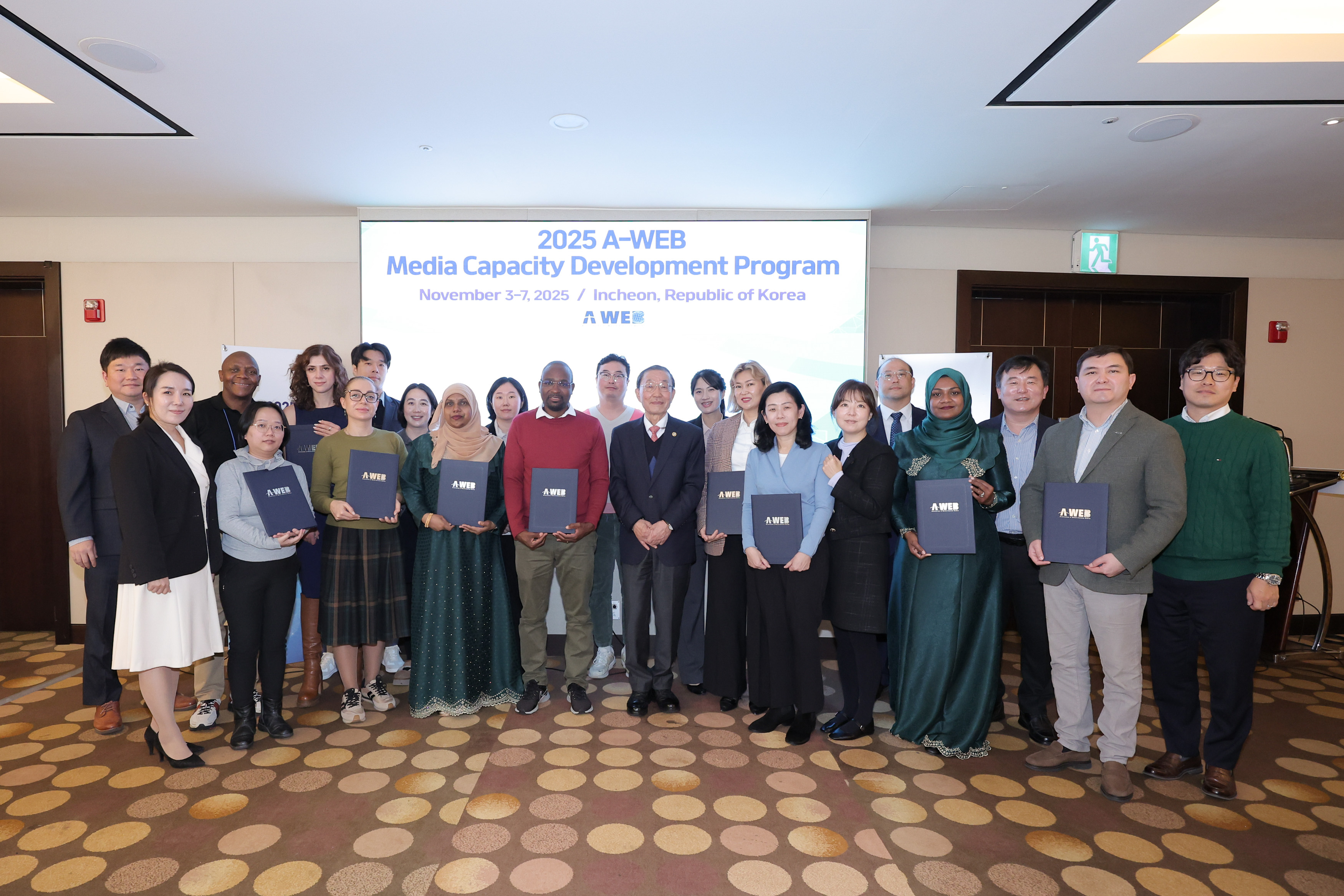
high satisfaction. On the final day, during the Workshop on Lessons Learned and
the closing ceremony, participants expressed gratitude for the program,
appreciating the educational content, cultural exchanges, and practical lessons
on combating misinformation. An overall survey showed high satisfaction, with
participants rating sustainability at 4.9, indicating they would apply the lectures
learned in practice.
The program was proved to be both productive and informative, offering participants a valuable opportunity to exchange knowledge and insights on critical issues such as media response systems, deepfakes, cyber-election crimes, media literacy, and crisis management. It also fostered meaningful discussions on how to address election security risks and emphasized the importance of global collaboration in safeguarding free, fair, transparent, and participatory elections. The A-WEB Secretariat is proud to have facilitated this gathering and looks forward to continued cooperation with all EMBs in the shared pursuit of strengthening electoral processes worldwide. |